
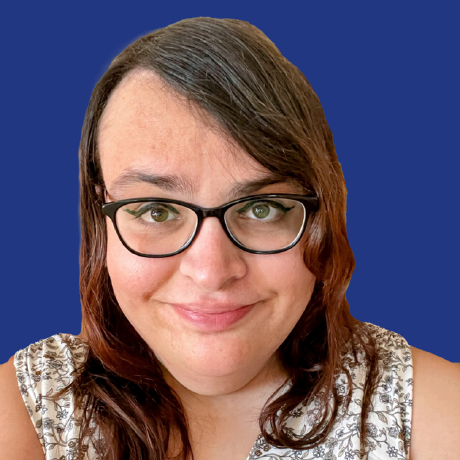




Senior Director of Engineering. I lead teams, write code, and build public-interest software.
I lead engineering teams and still work hands-on. At Coforma, I lead engineering managers and individual contributors delivering public-interest digital services. I stay close to architecture, accessibility, reliability, and the people doing the work.
I've spent the last decade building civic technology. Much of that work is unglamorous but important: turning policy into software, fixing messy data, making public services accessible, and keeping them secure and reliable. I also work on open data standards, including CTDL for workforce credentials and FHIR for health data.
Before Coforma, I built public systems inside California government at the Department of Social Services, Energy Commission, and Public Utilities Commission, and led application development at UC Berkeley.
Based in Davis, California · Portfolio · LinkedIn
Most projects here are betas or reference implementations. They are not proof of production use or adoption. Each README says what works, what does not, and what still needs human review.
- Transit Delivery Atlas. A close, source-linked reading of California Executive Order N-7-26. The signed order, my analysis, and unanswered questions are kept separate. Explore the atlas.
- GTFS Scorecard. Live, plain-language quality scorecards for 1,100+ U.S. and Canadian GTFS feeds, with GTFS-Realtime monitoring where available, a fail-closed CI gate, and a read-only MCP server. Visit gtfsscorecard.org.
- tods-validate. A published TODS v1.0–v2.1 validator for the CLI, GitHub Actions, pre-commit, browser, Docker, and LSP workflows. It includes auto-fix, GTFS drift diagnostics, and a merged upstream standards correction.
- Fare Policy Assistant. A reduced-fare reference assistant for five California transit agencies. It answers in English and Spanish, cites dated sources, and explains policy without deciding whether someone qualifies. The repo includes a public 201-case evaluation and a separate black-box audit.
- NearMiss. Road-hazard analysis that accounts for exposure and uncertainty instead of treating a heat map as evidence. It includes known-answer hotspot tests, multi-source ingestion, and a QGIS plugin. The public demos use synthetic data and say so.
- habitable. Alpha software for tenant unions to keep encrypted records of habitability problems, with trusted timestamps, chain of custody, and peer-to-peer sync. There is no central store of tenants' personal data. Do not rely on it in a real legal matter yet.
- ledger. A private community archive for queer history and mutual-aid knowledge. It uses established preservation formats, and contributors choose what is public, community-only, or sealed.
- For nonprofits: constituent-reconciler and outcome-receipts.
- Community data: Davis Bike Hazard Map and Swelter.
- Personal tools that keep their data local: Olive Bark Logger, Queer the Stacks, and Sprout.
- This site: chelseakr.com is bilingual, targets WCAG 2.2 AA, and documents the additional accessibility checks and manual reviews still in progress.
There is also a TODS fork I use for upstream standards work. Browse every public repository.
- I won't work on weapons or warfare, policing or mass surveillance, or technology that profits from incarceration. I also won't work with organizations based in, or strongly tied to, Israel.
- I look for organizations whose work helps people routinely failed by public systems, and whose leadership reflects the communities they serve.
- I won't use AI to decide whether someone gets a job, benefit, service, or opportunity. It can help a person make a decision, but that person should be able to see the evidence, correct bad information, and make the final call.
- I collect as little personal data as I can. I prefer local and offline tools when they are practical, and I want people to choose what they share.
- I show sources, calculations, and my own interpretation separately. When a system does not know something, it should say so.
I spend most days in Python, TypeScript, React, AWS, and data systems. I like clear boundaries, useful logs, known-answer tests, and checks that stop when they cannot prove the result. Privacy, accessibility, and operations are part of the first design, not a cleanup pass.
AI agents are part of my development workflow. I choose the architecture, write the acceptance criteria, review the output, and decide whether it is ready to release. Legal, policy, subject-matter, and manual accessibility reviews are done by people.
I'm interested in W-2 senior engineering leadership roles where I can lead people, stay close to the architecture, and build reliable, accessible public-interest technology. My strongest domains are energy and utilities, public health, workforce systems, social services, and responsible AI.
Reach me through chelseakr.com or LinkedIn.